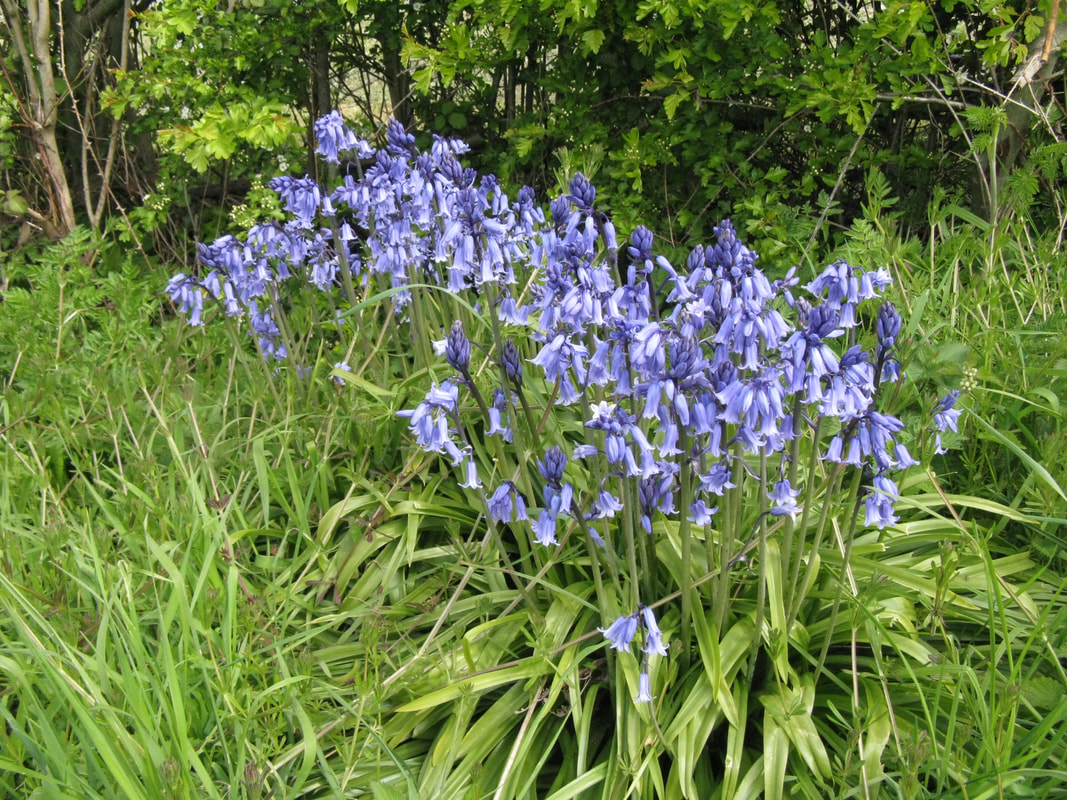
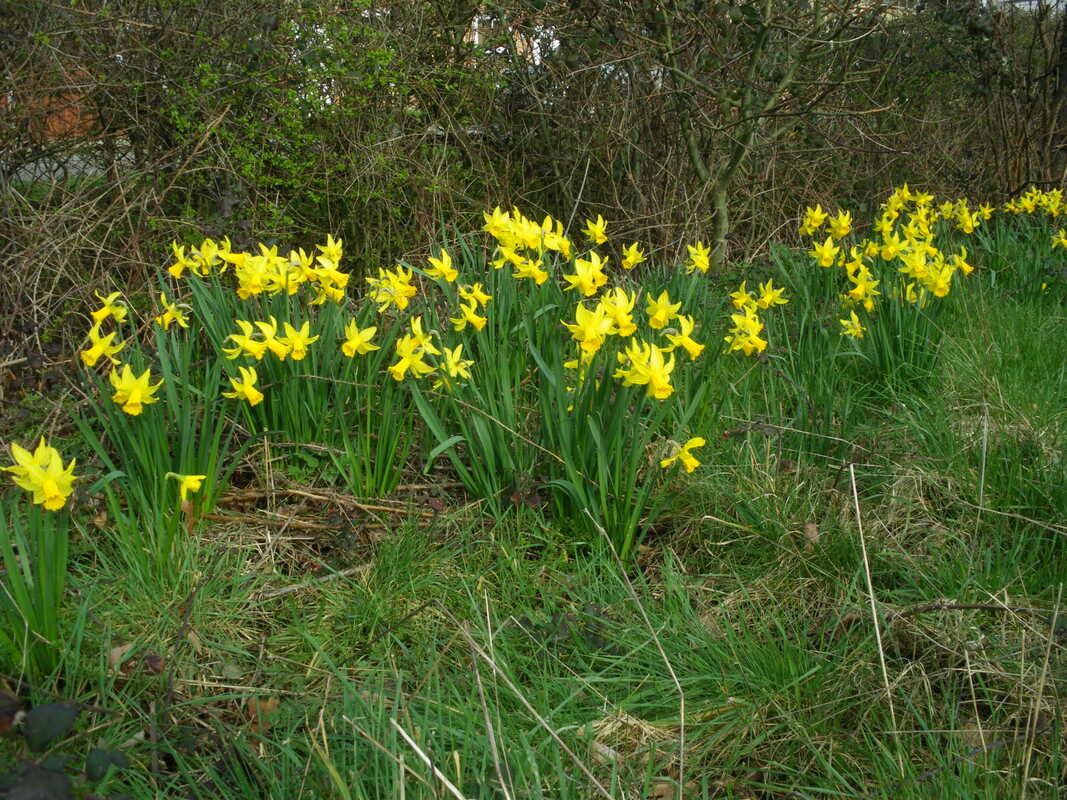
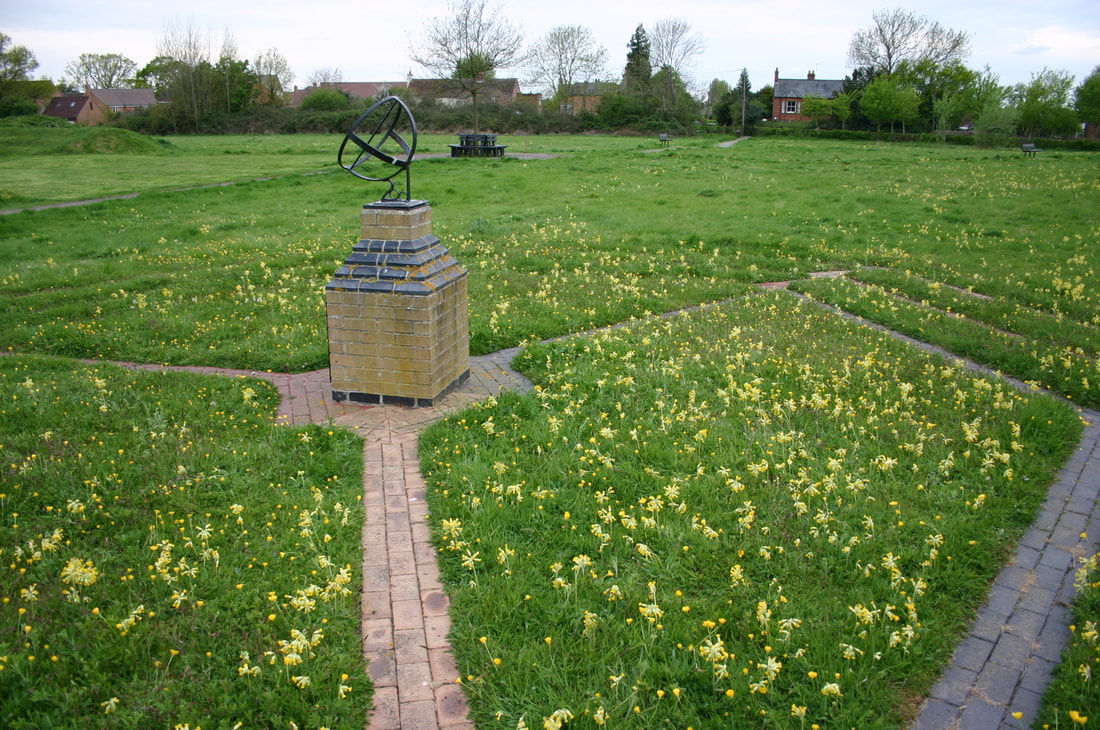
Spring is definitely sprung we have had some snowdrops a wonderful display of Daffodils. Look out for Bluebells in shady areas, cowslips on the main meadow and around the sundial. The native Bluebell only have flowers on one side of the stem.
ANGEL FIELD MILLENNIUM GREEN
The Millennium green celebrated 25 years in 2025. It is one of 245 wildflower meadows initiated by the Country Agency and funded by the Millennium commission and the National lottery to be a permanent legacy of the millennium celebrations. Maintained by trustees and volunteers for the benefit of all villagers. New volunteers are urgently needed to maintain this valuable village asset. Contact [email protected] or Keith Leedell 01553810848, Chris Dyson 01553810407 or Elaine Carpenter 01553811110.
During the week 23rd to 27th talks were given at the Watlington primary school explaining the reason why there is the Millennium green and the benefits of access to nature and of biodiversity. Each class created drawings of trees, flowers and tried pressing flowers to preserve their appearance. Each pupil was also given a penant to decorate with their favorite view of nature. These were displayed with the many drawings on Saturday 28th on the green. Every day each class visited the Millennium Green in turn to identify plants and insects made some leaf and bark rubbings guided by the trustees and accompanying teachers.
Displays featuring the history of the Millennium Green, the Watlington school art work and the trustees. Chris Dyson, Keith Leedell, Annie Bird, Kate Carpenter and Mike Carter.
Below some of the drawings on paper, flags and pressed flowers.
Millennium Green Hedgerows , Berries and Birds
It is easy to take hedgerows for granted, we all walk past several different hedgerows and fenced boundaries every day and keep to the verges where such exist. However, they are always worth a closer look, the variety of plant species to be found, their girth and height are all good indicators of age. These are sanctuary strips for wildlife and the thicker their base the richer the range of flora and fauna to be found there. Of course, the reality is that most will not be found as the very dense nature of the hedge provides protection and secrecy which makes them a safe home for all sorts of insects, small animals and birds.
The volunteers working on ‘The Green’ have recently been kept busy managing the main run of the twenty-year old hedge trying to balance neatness and conservation. Trimmings are deployed to build up some soft and rotting material which long term will help benefit the soil and short term will provide nutrients for all manner of wildlife.
The wilder hedgerow which borders Fairfield Lane is generally left alone and the brambles have taken hold along a great part of it. The level of birdsong along this stretch is notably louder than most of the rest of ‘The Green’ put together. Summer did see a good crop of blackberries mostly consumed by the birds and winter makes the thorns more prominent whilst the blackthorn sloes are now in evidence -again food for birds save for those taken to flavour gin. Interestingly the long, arching stems of bramble were once known as ‘lawyers’ because of the trouble you have escaping if you fall into their clutches.
A key plant amidst parts of the hedging around the green is ivy often loved and loathed in equal measure. Ivy grows under its own steam and is a magnificent climber and on occasion will outweigh the tree canopy it has taken over and create problems. Ivy can also have such a grip on walls and building that the act of prizing it off will cause masonry to dislodge and loosen bricks creating real difficulties. But ivy also provides the last main source of nectar and pollen for bees to top up their winter stores from mid-September to November. As you pass the ivy in flower you can often hear the glorious roar of bees, and later the dark berries that last through until spring continue to benefit insects and birds. With Christmas approaching ivy is often used to accompany holly to help decorate the house, so it remains a versatile and tenacious plant perhaps more admired than not.
With plants approaching dormancy the time will soon be right to plant trees. Whilst a young persons’ game the aim is to plant over a hundred whips in the coming month so that future generations can enjoy maturing trees for generations to come. If you would like to help to grow a greener future do not hesitate to contact any of the volunteers who will often be found working on the green on the first Saturday of the month from 10.00 am to 12.00 noon.
Mike Carter
It is easy to take hedgerows for granted, we all walk past several different hedgerows and fenced boundaries every day and keep to the verges where such exist. However, they are always worth a closer look, the variety of plant species to be found, their girth and height are all good indicators of age. These are sanctuary strips for wildlife and the thicker their base the richer the range of flora and fauna to be found there. Of course, the reality is that most will not be found as the very dense nature of the hedge provides protection and secrecy which makes them a safe home for all sorts of insects, small animals and birds.
The volunteers working on ‘The Green’ have recently been kept busy managing the main run of the twenty-year old hedge trying to balance neatness and conservation. Trimmings are deployed to build up some soft and rotting material which long term will help benefit the soil and short term will provide nutrients for all manner of wildlife.
The wilder hedgerow which borders Fairfield Lane is generally left alone and the brambles have taken hold along a great part of it. The level of birdsong along this stretch is notably louder than most of the rest of ‘The Green’ put together. Summer did see a good crop of blackberries mostly consumed by the birds and winter makes the thorns more prominent whilst the blackthorn sloes are now in evidence -again food for birds save for those taken to flavour gin. Interestingly the long, arching stems of bramble were once known as ‘lawyers’ because of the trouble you have escaping if you fall into their clutches.
A key plant amidst parts of the hedging around the green is ivy often loved and loathed in equal measure. Ivy grows under its own steam and is a magnificent climber and on occasion will outweigh the tree canopy it has taken over and create problems. Ivy can also have such a grip on walls and building that the act of prizing it off will cause masonry to dislodge and loosen bricks creating real difficulties. But ivy also provides the last main source of nectar and pollen for bees to top up their winter stores from mid-September to November. As you pass the ivy in flower you can often hear the glorious roar of bees, and later the dark berries that last through until spring continue to benefit insects and birds. With Christmas approaching ivy is often used to accompany holly to help decorate the house, so it remains a versatile and tenacious plant perhaps more admired than not.
With plants approaching dormancy the time will soon be right to plant trees. Whilst a young persons’ game the aim is to plant over a hundred whips in the coming month so that future generations can enjoy maturing trees for generations to come. If you would like to help to grow a greener future do not hesitate to contact any of the volunteers who will often be found working on the green on the first Saturday of the month from 10.00 am to 12.00 noon.
Mike Carter
Look out for the Information Signs on the Millennium Green. Thanks to donations from the late Mr Geoff Beaumont these very smart signs are a worthy addition to the site. Additional big thank you to Dove Furnishings for refurbishing the signs.
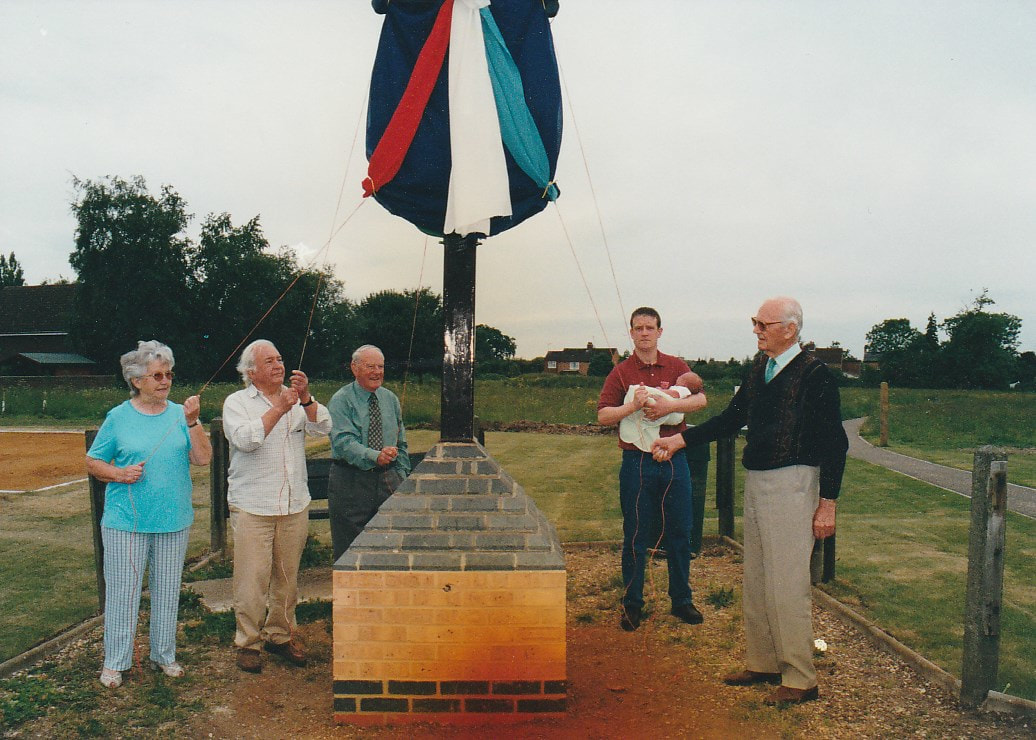
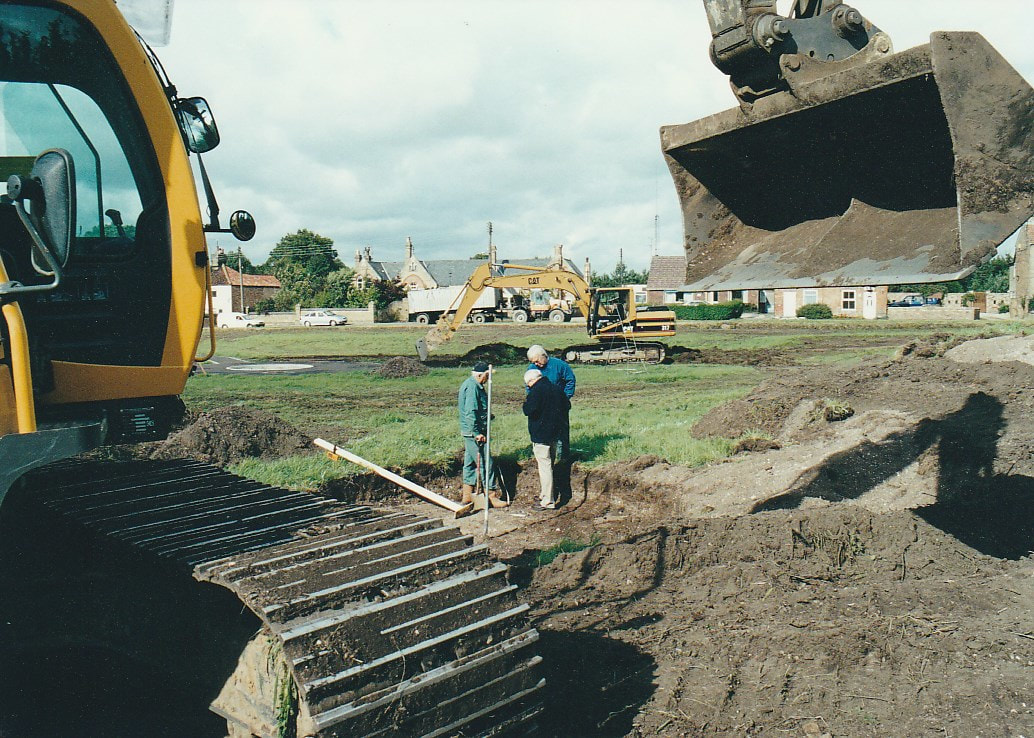
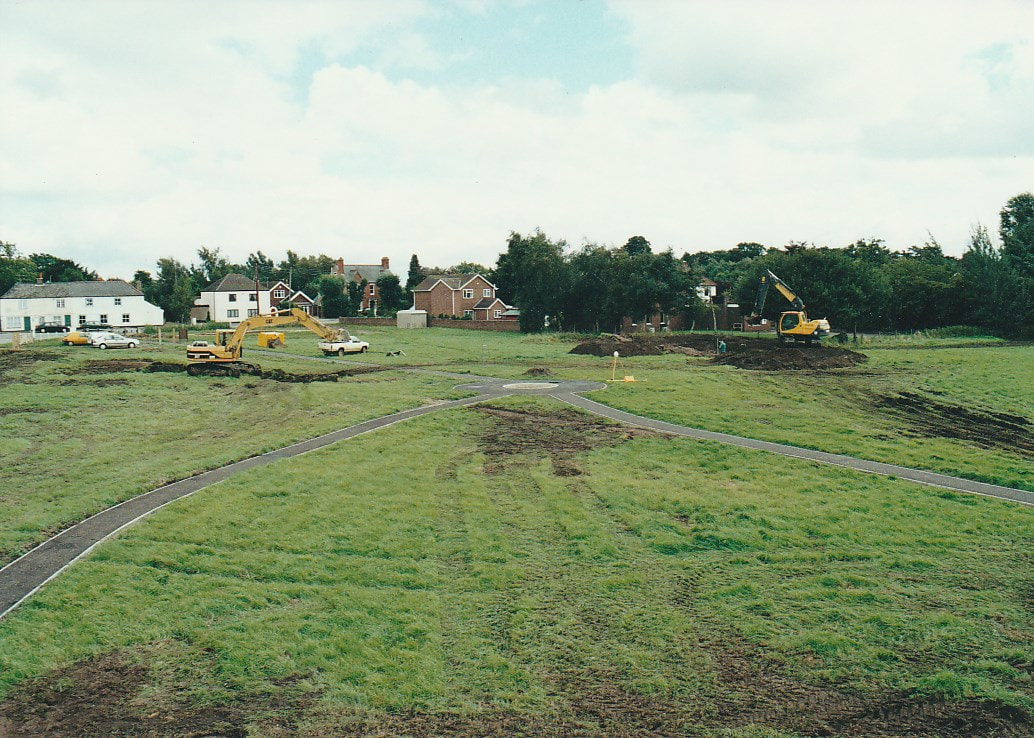
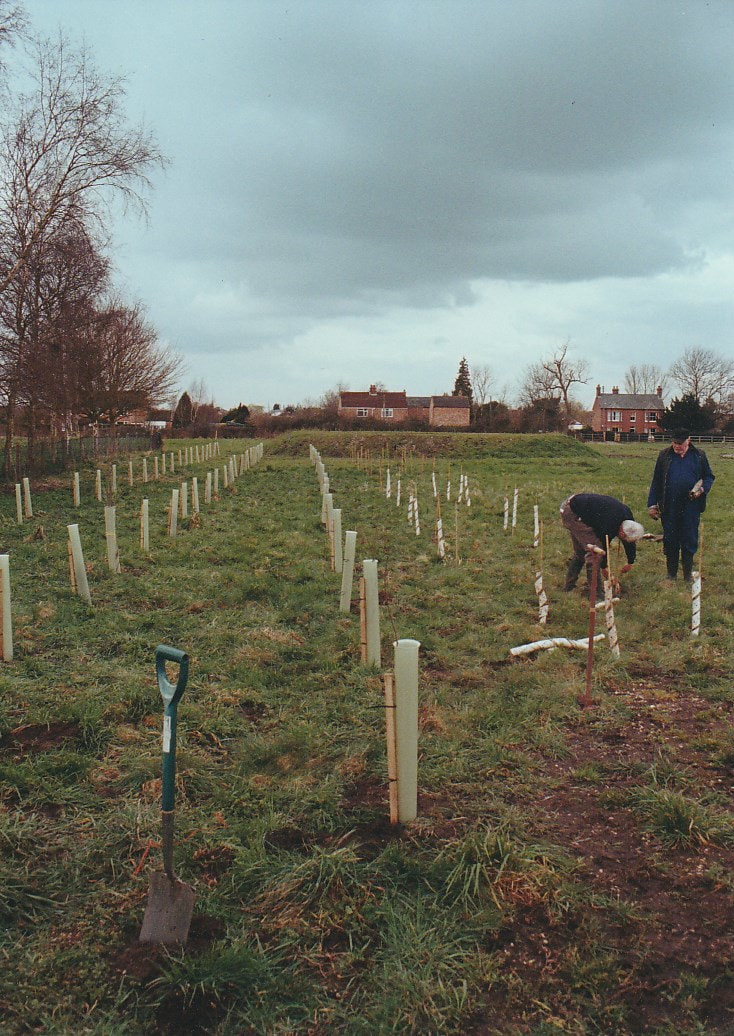
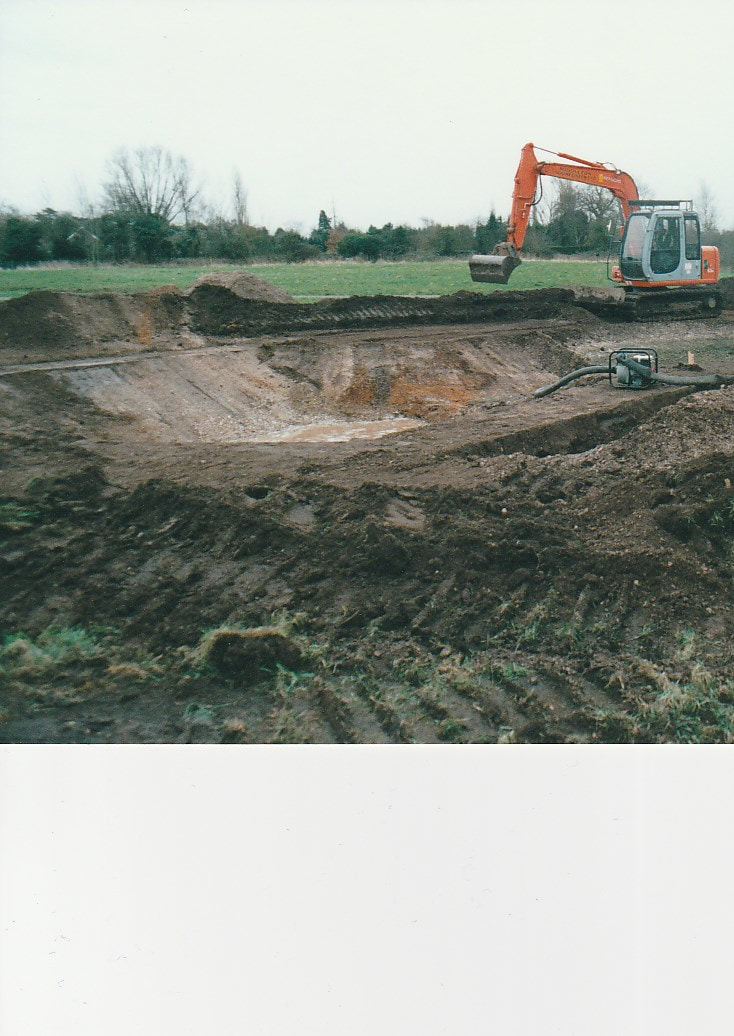
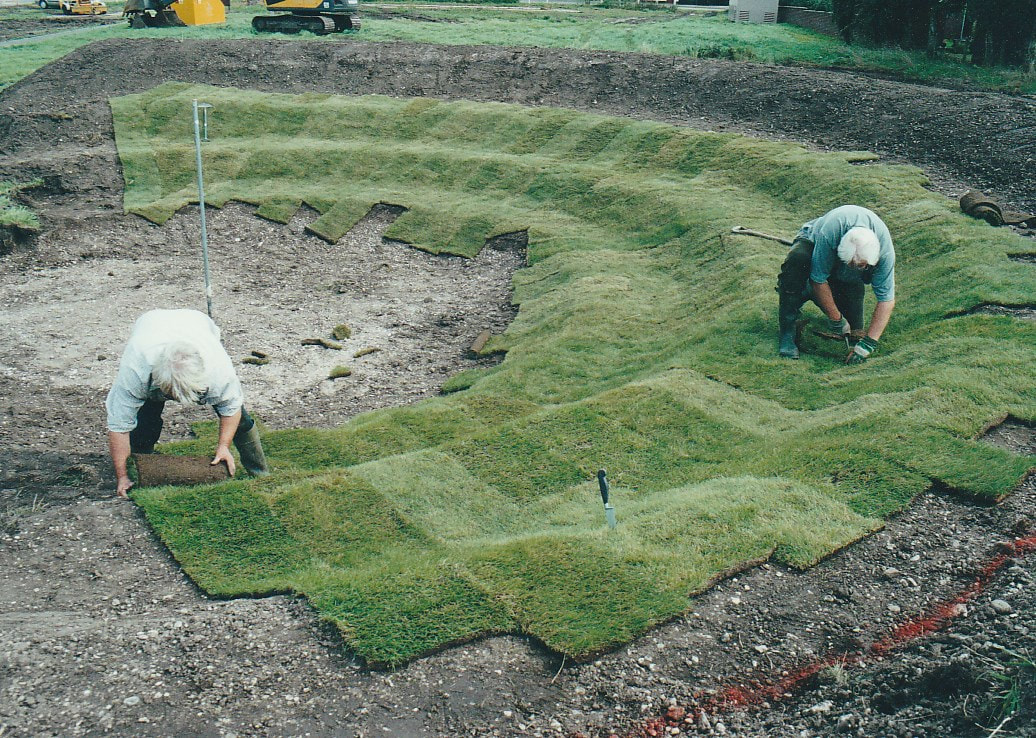
Some of the rediscovered photos from the original build and design. ( see below). From top left and left to right.Geoff Beaument,Lillian Garfoot,Richard Rockliffe,Barry Shears,Hugh Lacey,Jean Golding,Kate Carpenter,Peter Ryder. Unveiling a refurbished Village sign Lillian Garfoot,Hugh Lacey,Julian Ansell,Nathan Macdonald and child, Ted Featherby. The others show construction planting the copse, the pond a lot deeper than now, turfing the amphitheatre, the Angel from 2002 the Queens Golden Jubilee and Jean Papworth planting the original feature Black Poplar which sadly was damaged and replaced with an Oak.
History of the Millennium Green
The project to create 250 Millennium Greens started in 1996 and ended when the last green was handed over to its own local charitable trust in perpetuity. Each trust now fundraises for and runs its own green, within the bounds of its trust deed, for the benefit of its local community.
Aims
The aims of Millennium Greens, as stated in their trust deeds, are as follows:
Design of the greens. The general blueprint for the design and creation of Millennium Greens specified both green, natural areas and an area suitable for public events. The Trust Deeds also specified that no buildings were to be built on the land and not more than 10% of the land should be hard areas, such as paving or car parks.
Another requirement of the original sponsors was that they would not provide formal sporting grounds and play equipment, so no pitches or playground apparatus were to be built with their funds.
Every Millennium Green was to have a feature: some kind of sculpture or other creation which could act as a focus for the green's creation and opening. Various green projects chose something inspired by the history or geography of their locality, such as a statue, water feature or sun-dial. Many of these were unveiled at an official opening ceremony for the green.
Creation
The Countryside Agency (CA) administered the creation of the greens, with regional officers studying grant applications and plans, then surveying land and discussing details with local would-be trustees. The CA's team suffered from many of their operatives being on short-term contracts to do this work, encouraging them to look for new work elsewhere, then leave before the end of the project.
Wildlife
Having a wildlife area is a part of the aims of creating and running a Millennium Green and most of the greens' trusts maintain an interest in the wildlife of their greens. Most websites relating to each green have something to say about wildlife and many have photos and lists of species.
Legacy
By the end of the scheme, 245 out of the planned 250 Millennium Greens were created. Whilst some lessons were learnt about creating such schemes, the Countryside Agency considered the project such a success that in 2001 it launched Doorstep Greens to continue creating locally-run public green areas. The CA's successor, Natural England, has evaluated both schemes and identified some weaknesses[3] in the plans for both Pocket Parks and Millennium Greens that have made them difficult to create and maintain in perpetuity. Millennium Greens and Doorstep Greens have won numerous Green Pennant Awards. Royal Mail celebrated the Millennium Green project in its People and Places stamps as part of its Millennium Collection in 2000.
The greens were intended to last in perpetuity and, as such, each was set up with a trust deed including requirements to keep the land and have it available for access by the general public. As charitable trusts, each body's operation is controlled by the Charity Commission. Many Millennium Greens were established with formal links to other charities and official bodies. Their deeds enable them to work with commercial sponsors, and some greens have used sponsorship to further their aims.
Because the trusts are reliant on local volunteers being willing to stand as trustee, some trusts are no longer independent. A number have been changed by Natural England and the Charity Commission, with the local authority usually becoming the green's sole trustee.
Whilst the greens were intended to last in perpetuity, with most of them given a 999-year lease, they are vulnerable to compulsory purchase if the local authority wants to change the use of the land.
Angel Field Millennium Green Trust Charity No 1072470
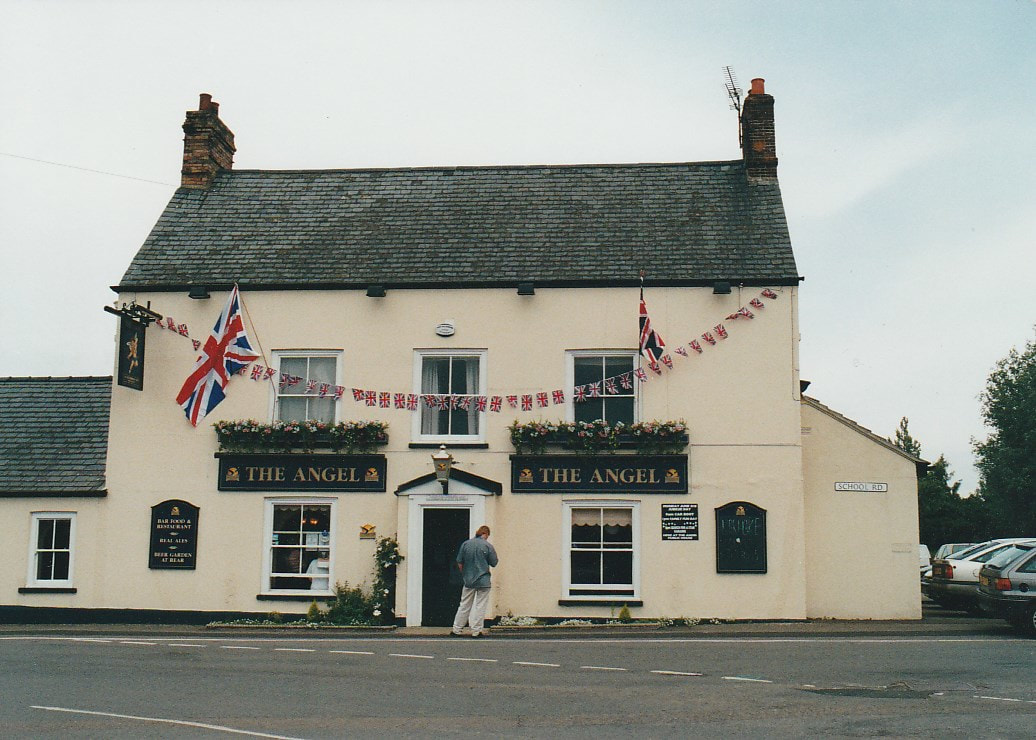
The Millennium Green as the name suggests came into being for the year 2000. Before this it was part of the Angel pub's tenancy. Bill Cameron, landlord for 38 years, used to keep his donkey on the field accompanied by a Shetland pony. Before that it had many uses.
A metal detector survey found evidence (a small lead holy water flask, an Ampulla, and other medieval items) that it was a stop over for Pilgrims on the way to Walsingham. The Easter Cross still journeys through the village on its way there. Many Victorian coins and other items were found thought to have been lost when the green was used for travelling fairs. The name of the adjoining path, Fairfield Lane was thought to be where fairs were held. New information suggests somewhere along the current Station road. During WW/2 there was a searchlight battery here and a pillbox still remains.
For many years the village pound (where stray animals were impounded until the owner paid a fine) was sited further into the green and as part of the Jubilee celebrations was moved to the road edge to accommodate the village sign. A memorial seat was added and the fence and paving provided by the Parish Council. The Flower trough is maintained by the Womens lnstitute.
To acquire the field and create the Millennium Green for the village a charity was set up in1998 run by Trustees. There were several other Millennium Greens being set up and some other daft ideas like a large tent in London. Much work was done to win grants to buy the field from the brewery. The aim of the Millennium Green was to provide a space for informal recreation, a meeting place and to make a positive contribution to the local environment. It was to include significant natural areas where people could enjoy wildlife and nature at first hand.
The sun dial and puzzle path are a millennium feature. The colours of the path reflect the different shades of brickwork of surrounding houses. The sun dial reads GMT of course. Unfortunately moles like the area as well and it needs constant attention. lf you are passing walk round the puzzle path your footsteps may deter the moles. The Amphitheatre was created for plays and makes a toboggan run in winter. There is a bog area or pond if there is enough rain and there should be a display of wet area plants if we can keep the willows in check. There was also a Petanque Pitch created near the village sign.
The main meadow is managed as a green space to encourage flora and fauna. lt was
planted with native wild flowers and grasses. There are over one hundred and ninety species of grass and flowers, to produce a rich habitat for birds, butterflies and bees. The main meadow is cut for hay in summer to allow the plants to seed and regenerate. Tree planting is on-going. A Copper Beech was planted for the tenth anniversary of the green, a Scots pine on the retirement of Dr Hugh Lacey, for many years chairman of the Parish Council and local GP, and three blossom trees to celebrate the Queens Diamond Jubilee. lnformation display boards have been installed with information on the Millennium Green, the Wildflower Meadow and the Bog Pond area. Thanks to generous donations from the Watlington Gossip and Geoff Beaumont with the art work also a contribution.
Please enjoy the Millennium Green for what it is, an open green space to promote nature and outdoor leisure. lt is administered and maintained by a group of trustees with volunteer labour, some professional services and support from the Parish Council.
The project to create 250 Millennium Greens started in 1996 and ended when the last green was handed over to its own local charitable trust in perpetuity. Each trust now fundraises for and runs its own green, within the bounds of its trust deed, for the benefit of its local community.
Aims
The aims of Millennium Greens, as stated in their trust deeds, are as follows:
- Make a substantial contribution to the life of the whole community
- Be able to be enjoyed by people of all ages and physical abilities
- Be open and evident to visitors to the locality as well as inhabitants
- Be an attractive place for people to take air and exercise, meet others and pursue leisure activities and pastimes consistent with the shared enjoyment of the whole of the land
- Include an area suitable for community events and celebrations
- Include significant "natural" areas, where people can enjoy nature and wildlife at first hand
- Make a positive contribution to the local environment and respect the established character of the area
- Remain safely and conveniently accessible from inhabitants' homes
Design of the greens. The general blueprint for the design and creation of Millennium Greens specified both green, natural areas and an area suitable for public events. The Trust Deeds also specified that no buildings were to be built on the land and not more than 10% of the land should be hard areas, such as paving or car parks.
Another requirement of the original sponsors was that they would not provide formal sporting grounds and play equipment, so no pitches or playground apparatus were to be built with their funds.
Every Millennium Green was to have a feature: some kind of sculpture or other creation which could act as a focus for the green's creation and opening. Various green projects chose something inspired by the history or geography of their locality, such as a statue, water feature or sun-dial. Many of these were unveiled at an official opening ceremony for the green.
Creation
The Countryside Agency (CA) administered the creation of the greens, with regional officers studying grant applications and plans, then surveying land and discussing details with local would-be trustees. The CA's team suffered from many of their operatives being on short-term contracts to do this work, encouraging them to look for new work elsewhere, then leave before the end of the project.
Wildlife
Having a wildlife area is a part of the aims of creating and running a Millennium Green and most of the greens' trusts maintain an interest in the wildlife of their greens. Most websites relating to each green have something to say about wildlife and many have photos and lists of species.
Legacy
By the end of the scheme, 245 out of the planned 250 Millennium Greens were created. Whilst some lessons were learnt about creating such schemes, the Countryside Agency considered the project such a success that in 2001 it launched Doorstep Greens to continue creating locally-run public green areas. The CA's successor, Natural England, has evaluated both schemes and identified some weaknesses[3] in the plans for both Pocket Parks and Millennium Greens that have made them difficult to create and maintain in perpetuity. Millennium Greens and Doorstep Greens have won numerous Green Pennant Awards. Royal Mail celebrated the Millennium Green project in its People and Places stamps as part of its Millennium Collection in 2000.
The greens were intended to last in perpetuity and, as such, each was set up with a trust deed including requirements to keep the land and have it available for access by the general public. As charitable trusts, each body's operation is controlled by the Charity Commission. Many Millennium Greens were established with formal links to other charities and official bodies. Their deeds enable them to work with commercial sponsors, and some greens have used sponsorship to further their aims.
Because the trusts are reliant on local volunteers being willing to stand as trustee, some trusts are no longer independent. A number have been changed by Natural England and the Charity Commission, with the local authority usually becoming the green's sole trustee.
Whilst the greens were intended to last in perpetuity, with most of them given a 999-year lease, they are vulnerable to compulsory purchase if the local authority wants to change the use of the land.
Angel Field Millennium Green Trust Charity No 1072470
The Millennium Green as the name suggests came into being for the year 2000. Before this it was part of the Angel pub's tenancy. Bill Cameron, landlord for 38 years, used to keep his donkey on the field accompanied by a Shetland pony. Before that it had many uses.
A metal detector survey found evidence (a small lead holy water flask, an Ampulla, and other medieval items) that it was a stop over for Pilgrims on the way to Walsingham. The Easter Cross still journeys through the village on its way there. Many Victorian coins and other items were found thought to have been lost when the green was used for travelling fairs. The name of the adjoining path, Fairfield Lane was thought to be where fairs were held. New information suggests somewhere along the current Station road. During WW/2 there was a searchlight battery here and a pillbox still remains.
For many years the village pound (where stray animals were impounded until the owner paid a fine) was sited further into the green and as part of the Jubilee celebrations was moved to the road edge to accommodate the village sign. A memorial seat was added and the fence and paving provided by the Parish Council. The Flower trough is maintained by the Womens lnstitute.
To acquire the field and create the Millennium Green for the village a charity was set up in1998 run by Trustees. There were several other Millennium Greens being set up and some other daft ideas like a large tent in London. Much work was done to win grants to buy the field from the brewery. The aim of the Millennium Green was to provide a space for informal recreation, a meeting place and to make a positive contribution to the local environment. It was to include significant natural areas where people could enjoy wildlife and nature at first hand.
The sun dial and puzzle path are a millennium feature. The colours of the path reflect the different shades of brickwork of surrounding houses. The sun dial reads GMT of course. Unfortunately moles like the area as well and it needs constant attention. lf you are passing walk round the puzzle path your footsteps may deter the moles. The Amphitheatre was created for plays and makes a toboggan run in winter. There is a bog area or pond if there is enough rain and there should be a display of wet area plants if we can keep the willows in check. There was also a Petanque Pitch created near the village sign.
The main meadow is managed as a green space to encourage flora and fauna. lt was
planted with native wild flowers and grasses. There are over one hundred and ninety species of grass and flowers, to produce a rich habitat for birds, butterflies and bees. The main meadow is cut for hay in summer to allow the plants to seed and regenerate. Tree planting is on-going. A Copper Beech was planted for the tenth anniversary of the green, a Scots pine on the retirement of Dr Hugh Lacey, for many years chairman of the Parish Council and local GP, and three blossom trees to celebrate the Queens Diamond Jubilee. lnformation display boards have been installed with information on the Millennium Green, the Wildflower Meadow and the Bog Pond area. Thanks to generous donations from the Watlington Gossip and Geoff Beaumont with the art work also a contribution.
Please enjoy the Millennium Green for what it is, an open green space to promote nature and outdoor leisure. lt is administered and maintained by a group of trustees with volunteer labour, some professional services and support from the Parish Council.